
A Critical Analysis of Akeel Bilgrami’s Critique of Secularism

Secularism: Theoretical Critique

Asad argues that secularism is not merely an opposition to religion; rather, it is a specific epistemology and way of life that emerged from particular historical circumstances.

New Historicism argues that history should be viewed not merely as a neutral and objective background, but as a text that is constantly constructed by power relations. Post-colonial studies are marked as the natural, and yet more political, evolutionary development of this method of historical criticism

In the introduction of his book Formations of the Secular, Asad argues that far from being merely a political doctrine, secularism is a distinct discipline and strategy used by modern states to maintain their power.

Thornton clarifies how seventeenth-century furniture and room layouts reflected the social status, power, and gender relations of that era.

New Historicism put forward the revolutionary idea that the customs and lifestyle of a society can be read and interpreted just like a literary work or a poem. Famous anthropologist Clifford Geertz is the thinker who applied this concept most effectively in the field of anthropology.

Jean-François Lyotard brought the concept of 'Metanarrative' (Grand Narrative) to international attention in 1979 through his work 'The Postmodern Condition: A Report on Knowledge'.
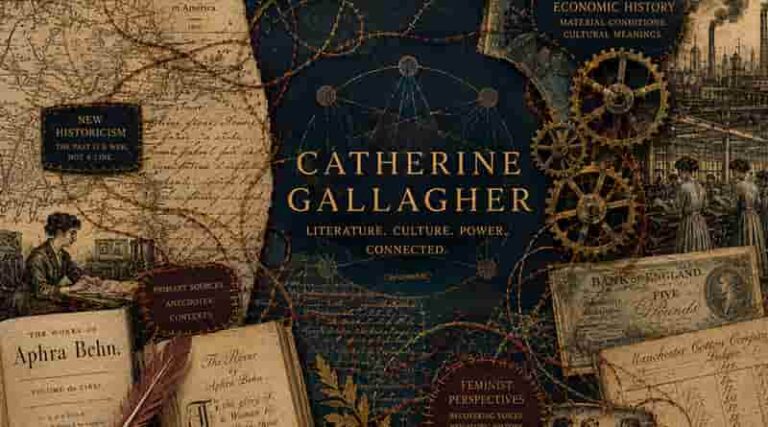
"Catherine Gallagher is another notable presence who merits distinct recognition for her pivotal role in advancing New Historicist theories and their methodologies."
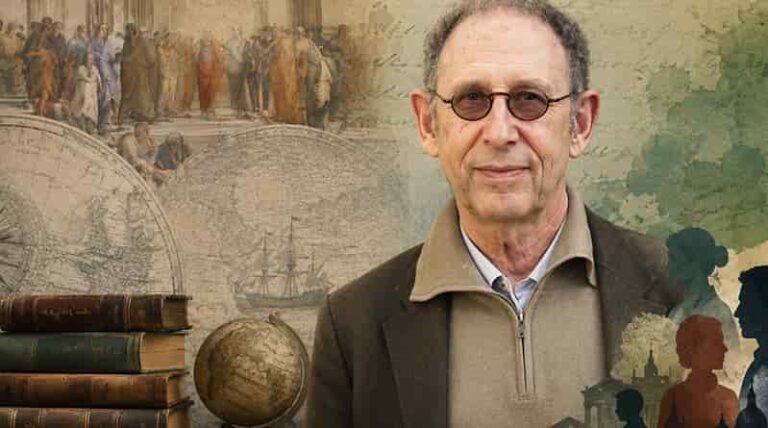
"Stephen Orgel is another prominent literary critic and historian who laid a strong foundation for New Historicism, a school of thought that investigates how literary works converse with the socio-political systems and power structures of the era in which they were created."