
Know that the beginning of the spiritual path (Tariqah) is a powerful divine awakening (an urge) cast into the heart of the servant.
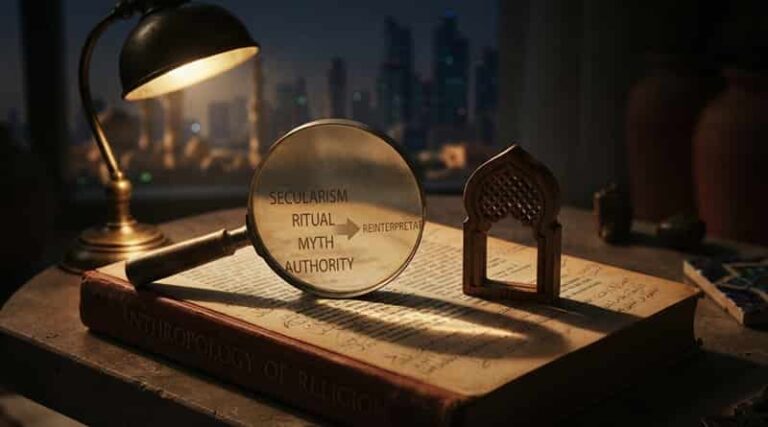
Asad argues that secularism is not merely an opposition to religion; rather, it is a specific epistemology and way of life that emerged from particular historical circumstances.
A translation of a prominent Sufi text written as a guide for spiritual seekers on the Sufi path.

New Historicism argues that history should be viewed not merely as a neutral and objective background, but as a text that is constantly constructed by power relations. Post-colonial studies are marked as the natural, and yet more political, evolutionary development of this method of historical criticism

Presented here are the four most sublime couplets, from 10 to 13, of 'Naynama' (The Song of the Reed), the opening verses of the Masnavi Sharif.

The blockade in the Strait of Hormuz is paving the way for a new regional economic order, altering the security of the global oil market and the geopolitical significance of the Middle East

The sixth part of the study series describing the importance of purification of the heart (Tazkiyah) for travelers on the spiritual path (Suluk), who are preparing for their spiritual journey toward Allah by liberating their hearts from the illusions of worldly desires.

The final part of the study series that critically examines the theory of evolution in the light of new scientific inquiries.

In the introduction of his book Formations of the Secular, Asad argues that far from being merely a political doctrine, secularism is a distinct discipline and strategy used by modern states to maintain their power.

Thornton clarifies how seventeenth-century furniture and room layouts reflected the social status, power, and gender relations of that era.